What the story of David and Saul teaches us about music, restoration, and God's design for healing.
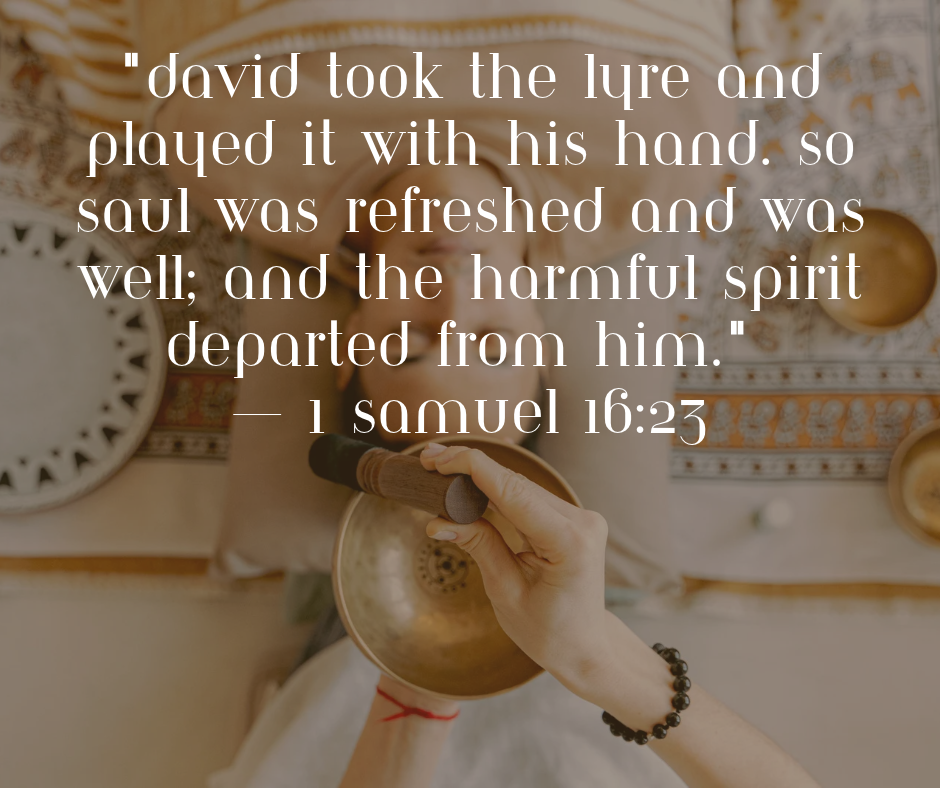
I want to share a story from the Bible that I find particularly meaningful when I think about sound and its place in our healing and restoration. It's the story of David and King Saul, found in 1 Samuel 16. You may already be familiar with David as the young shepherd who defeated Goliath and eventually became king of Israel, but before any of that happened, David was known for something else. He was a gifted musician, and his ability to play the harp brought comfort to a man who was experiencing tremendous distress.
Scripture tells us that King Saul was deeply troubled, and those around him recognized that he needed some relief. They suggested finding someone who could play an instrument for him, and eventually David was brought into his presence. Whenever Saul became distressed, David would begin to play, and the Bible tells us that Saul would feel refreshed and better.
In 1 Samuel 16:23, we read:
"And it came to pass, when the evil spirit from God was upon Saul, that David took an harp, and played with his hand: so Saul was refreshed, and was well, and the evil spirit departed from him." — 1 Samuel 16:23, KJV
I think about this passage often because it reminds me that using music to bring comfort to someone who is suffering is certainly not a new idea. Thousands of years before we had research studies explaining how music affects the brain and nervous system, people understood that certain sounds could influence how a person felt. They may not have understood the physiology behind it, but they could recognize the difference music made.
What I find especially beautiful about this story is that David wasn't doing anything complicated. He was simply sitting with someone who was suffering and using the gift he had been given to bring him comfort. There is something deeply compassionate about that, and I believe it offers us a wonderful example of how sound can be used in caring for one another.
When I talk about sound healing, I don't think of it as something mysterious or separate from my Christian faith. I believe sound is part of God's creation, and our ability to experience and respond to it is one of the many remarkable ways He designed us. Think about how much sound is woven into our everyday lives. We hear birds singing in the morning, rain falling outside our windows, waves moving along the shore, and the familiar voices of people we love. Some sounds make us feel peaceful, others bring back memories, and some can change our mood almost immediately.
Have you ever heard a song that took you right back to a particular moment in your life? Maybe it reminded you of someone you love, a place you haven't visited in years, or a season of life you thought you had forgotten. You might find yourself smiling, crying, or feeling emotions you weren't even thinking about a few moments earlier. That's because hearing is connected to so much more than simply recognizing a sound. Our brains process sound in ways that involve memory, emotion, attention, and our physical responses.
And when you begin to understand how all of that works together, it becomes easier to appreciate why music can be such a meaningful part of our well-being.
We now have research showing that music can influence our stress response, help ease feelings of anxiety, and encourage relaxation. Depending on the music and the person listening, it may also influence breathing, heart rate, and other physiological responses. There is still a great deal to learn, particularly about different sound healing instruments and techniques, but we have good reasons to recognize that sound can affect both how we feel emotionally and how our bodies respond.
I find that fascinating because it reminds me how closely connected our physical and emotional lives really are. We sometimes talk about the mind and body as though they are two separate things, but anyone who has experienced prolonged stress knows that what we carry emotionally can eventually be felt physically. We may notice tension in our shoulders, difficulty sleeping, changes in digestion, or simply a sense that we can never quite relax.
I think many women understand that feeling all too well. We spend so much of our lives caring for other people, managing responsibilities, worrying about our families, and trying to keep everything moving forward. Even when we finally sit down at the end of the day, our minds are often still going through everything that needs to be done tomorrow. We may be resting physically, but we aren't necessarily experiencing the kind of rest our bodies and minds need.
This is one of the reasons I believe restorative sound experiences can be so beneficial. When we intentionally set aside time to become comfortable, close our eyes if we wish, and listen to gentle, thoughtfully created sounds, we are giving ourselves an opportunity to move away from the constant stimulation of everyday life. We aren't trying to accomplish anything or solve another problem. We're simply allowing ourselves some time to rest.
For some women, that may mean feeling their muscles begin to relax or noticing that their breathing becomes slower and more comfortable. For others, it may bring up emotions or memories that they haven't had much time to acknowledge. Sometimes the experience is simply peaceful, and that is valuable too. There doesn't have to be a dramatic response for the time to be meaningful.
I also think it's important to remember that we are all different. A sound that one woman finds deeply relaxing may not have the same effect on someone else. Our experiences, memories, sensitivities, and preferences all influence the way we respond. That's why I believe restorative sound should always be approached with care and an understanding of the individual rather than assuming that one particular instrument or frequency will have the same effect on everyone.
When I consider all of this through my Christian faith, I come back to the understanding that God created us as whole people. He didn't design our physical bodies independently of our emotions, thoughts, and spiritual lives. All of these aspects of who we are influence one another, and I believe caring for ourselves well means recognizing those connections.
There is another passage of Scripture that comes to mind whenever I think about rest. In Psalm 46:10, God tells us to "Be still, and know that I am God." I know this verse is often used when talking about relaxation, but its meaning goes much deeper than simply being quiet. It reminds us to recognize who God is and to place our trust in Him rather than believing that everything depends on our own efforts.
I think that is something many of us need to hear.
We live in a world that constantly encourages us to do more, achieve more, and fill every available moment with activity. Rest can almost feel like something we have to earn. Yet throughout Scripture, we see that rest has an important place in the life God intended for us. We were never meant to spend every waking moment striving, worrying, and carrying the weight of everything around us.
And perhaps that is part of what makes the story of David and Saul so meaningful to me. Saul was troubled, and David came alongside him with music. The passage doesn't give us a detailed explanation of how the sound affected Saul's body or mind, and it certainly doesn't tell us that a particular musical frequency was responsible. What it does tell us is that Saul experienced relief while David played. I believe that is worth paying attention to.
For me, sound healing isn't about believing that an instrument has some special spiritual power or that a particular frequency can cure an illness. I believe the restorative qualities of music are among the many gifts available to us within God's creation. Just as nourishing food, restorative sleep, movement, companionship, and time spent in nature can support our well-being, music and intentional listening can also have a meaningful place in the way we care for ourselves.
This understanding is especially close to my heart when I think about people who are facing serious illness or walking through grief. Cancer has touched my own family and taken people I love, including my father and grandmother, along with dear friends. Those experiences have taught me that healing is not always the same thing as being cured. Sometimes what someone needs most in a difficult moment is comfort, a little relief from the weight of what they're carrying, or simply an opportunity to rest without having to explain how they're feeling.
That is part of why I created Sound for Hope. I want to offer restorative sound experiences to people affected by cancer because I believe moments of peace and comfort matter, especially when life feels uncertain. I don't believe sound can promise a cure, and I would never want someone to feel that they need to have a particular experience for a session to be beneficial. My hope is simply to offer a peaceful environment where people can feel cared for and have a little time that belongs entirely to them.
I also want women to understand that they don't have to be experiencing an illness or a particularly difficult season of life to benefit from restorative practices. We all need rest. We all experience stress, disappointment, responsibilities, and seasons when life asks more of us than we feel able to give. Learning to make room for restoration before we become completely exhausted is an important part of caring for our long-term well-being.
When I look at the story of David and Saul, I see a reminder that caring for someone doesn't always require words. Sometimes compassion looks like sitting quietly beside another person. Sometimes it looks like offering a peaceful place to rest. And sometimes, as David demonstrated, it looks like sharing music with someone who needs comfort.
I believe God has given us a beautiful world filled with things that can nourish and restore us, and sound is one of them. The more I learn about the way our bodies respond to music, the more I appreciate the extraordinary care and complexity of His creation.
My hope through Bella Zen Restorative Sound™ is to help women rediscover the importance of rest and experience some of the benefits that intentional sound, stillness, and reflection can offer. Not because sound is a miracle cure or because every session will produce a particular result, but because I believe our physical, emotional, and spiritual well-being deserves thoughtful attention.
And perhaps one of the loveliest lessons we can take from David's story is that something as simple as music, offered with care and compassion, can make a meaningful difference in someone's day.
Sometimes that is where restoration begins.
